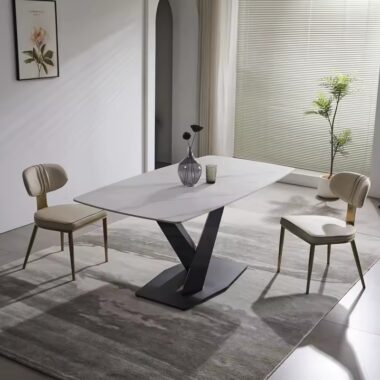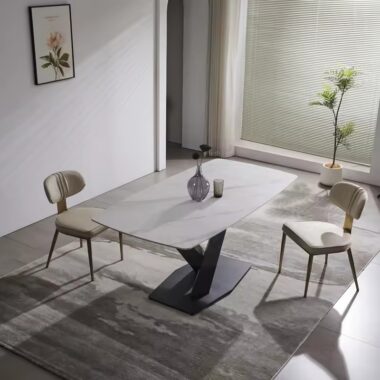



🔥 Why Ceramic Tabletops Are More Scratch- and Heat-Resistant
When it comes to choosing a dining table, the surface matters more than you might think. A tabletop isn’t just for setting plates—it has to handle spills, scratches, hot cookware, and everyday wear without showing signs of stress.
That’s where ceramic tabletops stand out. Thanks to advanced material science and smart design, they offer durability and performance that traditional wood, glass, or marble simply can’t match.
Let’s break down why ceramic is so much tougher—and why that’s a big deal.
🧱 What Makes Ceramic So Strong?
Ceramic tabletops are made by firing natural minerals like clay, feldspar, and quartz at extremely high temperatures—usually above 1200°C. The result? A dense, ultra-hard surface with properties you can see, feel, and trust.
✴️ Scratch Resistance: Built to Take the Hits
🔹 Everyday Protection
Whether it’s sliding plates, cutlery scraping, or the occasional dropped utensil, ceramic can handle it. The surface is so hard that it resists scratches even from metal, unlike wood or laminate, which easily show wear.
🔹 No Need for Coasters or Pads
Ceramic doesn’t need babying. You can move items across the surface without worrying about leaving a trail of marks.
🔹 Long-Term Beauty
This means your tabletop looks new for years, even in spaces with high traffic—ideal for kitchens, dining rooms, cafes, and open-plan living.
🛡️ Summary: Ceramic surfaces rate 7–8 on the Mohs hardness scale (diamonds are 10), far exceeding most furniture materials in durability.
🔥 Heat Resistance: Handles the Heat Like a Pro
🔹 No Fear of Hot Pans or Plates
Forget trivets and heat mats. You can place hot cookware straight from the oven onto a ceramic tabletop without burning, blistering, or leaving rings.
🔹 No Warping or Discoloration
Wood may warp. Laminate may bubble. Stone may crack. But ceramic holds its shape and color, even under extreme temperature changes.
🔹 Perfect for Everyday Living
This makes ceramic ideal for households where cooking, entertaining, and fast-paced dining all happen in the same space.
🌡️ Tested: Ceramic tabletops are regularly tested up to 250–300°C (482–572°F) without deformation or surface damage.
🧼 Bonus: It’s Not Just Strong—It’s Smart
While scratch and heat resistance are the headliners, ceramic tabletops come with a few more surprises:
💧 Stain-proof – Coffee, red wine, oil… all wipe away with ease
🌿 Non-porous & hygienic – No absorption of liquids or odors
☀️ UV-resistant – Won’t fade or yellow in sunlight
🧽 Low maintenance – Just a damp cloth is enough
All of this comes with zero sealing, zero polishing, and zero hassle.
🏡 Where Does This Matter Most?
| Space | Why Ceramic Works Best |
|---|---|
| 🍽️ Family Dining Areas | Kid-proof, stain-proof, and long-lasting |
| 🏨 Hotel Suites & Lounges | Looks elegant, resists daily wear |
| ☕ Cafés & Restaurants | Handles hot dishes and constant use |
| 🌇 Urban Apartments | Low maintenance, space-saving, stylish |
| 🌿 Outdoor Patios | UV and weather-resistant for open-air use |
✨ Why It’s a Better Investment
In the long run, choosing ceramic saves money and frustration. You don’t need repairs, refinishing, or protective layers, and you won’t be replacing it anytime soon.
For anyone furnishing a space that’s meant to be used daily and still look good year after year, ceramic is a smart, forward-thinking choice.
📌 Final Thoughts
A ceramic tabletop isn’t just about looks—it’s about confidence. You get a surface that can take heat, resist scratches, fight off stains, and still bring style to your space.
So if you’re looking for a table that’s as strong as it is stunning, ceramic delivers—quietly, beautifully, and relentlessly.