


🪑 How to Identify High-Quality Ceramic Dining Tables: A Complete Buyer’s Guide
Not all ceramic dining tables are made the same—and if you’re a wholesaler, designer, or business buyer, quality matters more than ever.
You want products that look good, hold up over time, and satisfy your clients or end-users. So how can you tell if a ceramic dining table is truly worth the investment?
Here’s a practical, no-fluff guide to spotting real quality in round or rectangular ceramic dining tables 🧐👇
🔍 1. Check the Ceramic Itself: Not All Are Equal
Ceramic tables are made using different types of materials—some cheap, some premium. High-quality ceramic should be:
✅ Sintered at high temperature (≥1200°C) for density and durability
✅ Non-porous, so it resists stains, odors, and bacteria
✅ Scratch-resistant—you should be able to run a knife across it (lightly!) with no marks
✅ Heat-resistant, so hot plates or cookware won’t damage the surface
🧪 Pro Tip: Ask if the tabletop has passed Mohs hardness, anti-scratch, or fire-resistance testing.
🏗️ 2. Pay Attention to Tabletop Thickness and Composition
A premium ceramic table will often have a multi-layered construction: ceramic on top, bonded to glass or stone beneath for extra strength and stability.
Avoid overly thin, single-layer tops that may crack or chip more easily. A good ceramic tabletop usually measures between 9–12mm thick with reinforced backing.
📦 It’s about more than just aesthetics—it’s about long-term durability.
🧩 3. Examine the Edges and Finish
Look closely at the edges—are they smooth, evenly finished, and chip-resistant?
🟢 High-quality tables feature:
-
Beveled or rounded edges (for both safety and finish)
-
Even glaze or texture coating with no color bleeding
-
Seamless joins with the base (if pre-assembled)
If the finish feels cheap or inconsistent, it probably is.
🪵 4. Evaluate the Base: The Hidden Strength
The tabletop may be ceramic, but the base determines the real-world performance.
🛠️ A high-quality ceramic dining table base should be:
✅ Made from powder-coated steel, solid wood, or aluminum
✅ Balanced and weight-tested (won’t wobble)
✅ Rust-resistant and wear-resistant
✅ Ergonomically designed to maximize leg space and seating
Avoid particle board or low-grade metal. These might save cost, but compromise lifespan and appearance over time.
🛋️ 5. Design, Size & Stability: It’s Not Just Surface Deep
A table that looks good in photos might not actually work well in a space. The best ceramic dining tables are:
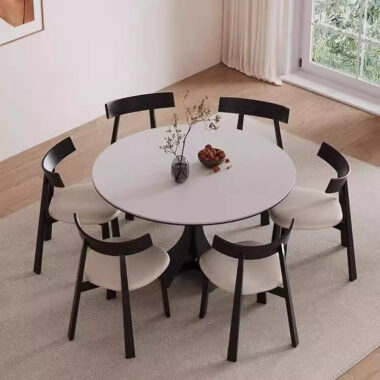
📏 Well-proportioned—can seat 4, 6, or 8 people without feeling crowded
🪑 Stable under weight, even at full seating capacity
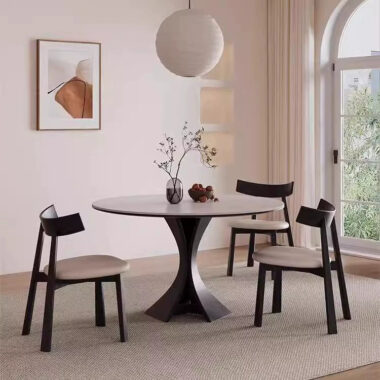
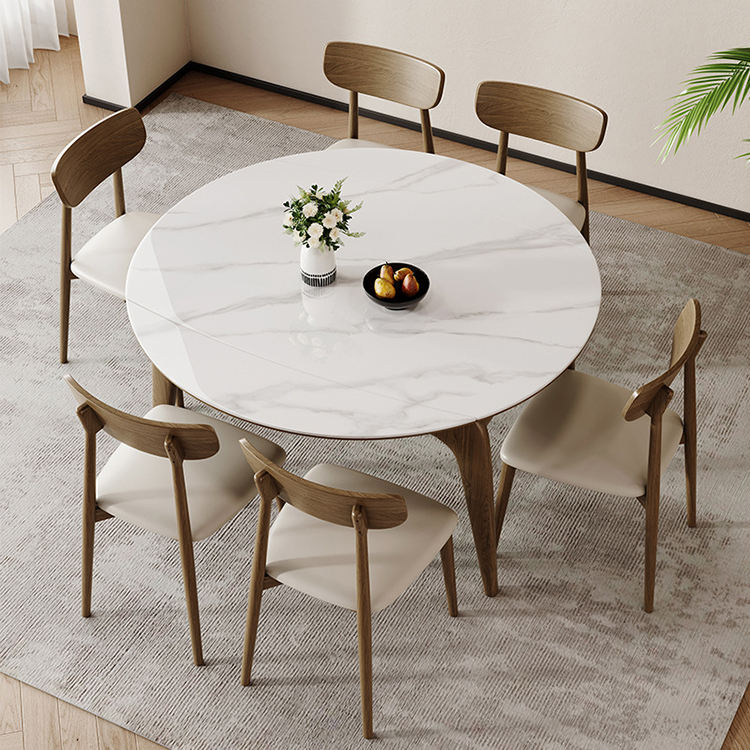
🎨 Designed to match multiple interiors—neutral finishes like white, gray, stone-look, or marble-effect remain popular
Bonus: If the design includes optional extensions or adjustable legs, that’s a sign of thoughtful engineering.
📋 6. Ask About Testing, Certification, and Warranty
Reputable manufacturers will back up their product with testing data and some form of warranty. This is especially important for commercial use.
🧾 Look for:
-
SGS or ISO test results (for strength, chemical resistance, etc.)
-
Fire and food safety certifications
-
Details on replacement or warranty terms (even if you don’t need them immediately)
No test reports = red flag. You deserve transparency when buying in bulk or for a design project.
💼 7. Work with a Reliable Supplier or Manufacturer
Even the best product won’t deliver if the supply chain isn’t reliable. Look for a ceramic dining table manufacturer who:
🔄 Offers custom sizes, finishes, or OEM/ODM support
📦 Has professional export experience and secure packaging
📸 Provides clear product catalogs, real photography, and technical specs
💬 Communicates clearly—especially during order confirmation, logistics, and after-sales
📌 In B2B, a product is only half the story—the service and supply consistency are just as important.
✅ Final Word: Quality Is in the Details
A ceramic dining table might look similar on the surface—but the difference lies in the details. When you’re choosing for a commercial project, a retail collection, or a premium brand, you want confidence that the piece will last and impress.
Don’t settle for generic.
Look closer. Ask questions. Check materials.
And when in doubt? Trust the supplier who shows you what’s inside the product—not just how it looks outside.